You are doing everything right – eating well, staying active, and trying to take care of yourself. And yet your body feels softer, heavier, and harder to change than it used to. Your strength seems to be fading even though your routine has not. This is one of the most common and frustrating things we hear from women in their 40s and 50s. It is not in your head.
What you are experiencing is not a willpower problem, but a hormone problem, and muscle loss in women during midlife is far more connected to biology than most conventional providers let on. Understanding what is actually driving the shift is the first step toward doing something real about it. (Always speak with a qualified provider before making changes to your supplement or treatment plan. Our providers at Aqua Vitae are here to help.)
Women Age Differently at the Cellular Level
Most people think of aging as something that happens slowly and evenly over time. For women, research is making it increasingly clear that the process looks nothing like that. The drop in key hormones during perimenopause and menopause triggers a faster, more systemic kind of aging. It touches everything from metabolism to muscle recovery after exercise.
The Hormone Cascade That Changes Everything
Estrogen, progesterone, and testosterone are not simply reproductive hormones. They regulate how your body builds and maintains muscle tissue, converts food into energy, manage inflammation, and respond to physical training. When estrogen starts to decline, often in a woman’s late 30s, the effects reach every system in the body.
Muscle mass and strength decline accelerate around the time of menopause in a pattern not observed in age-matched men. Women who maintained their muscle mass relatively easily in their 30s may find themselves losing ground much faster once estrogen levels start to decline. This is not a reflection of effort or discipline, but a biological shift, and it deserves a biological response.
Why the Timing Matters More Than You Think
Progesterone tends to decline before estrogen does during the perimenopause transition, and this early drop carries real consequences. Progesterone supports sleep quality and stress resilience, both of which are essential for muscle repair and overnight recovery. When sleep is disrupted, and cortisol remains elevated, the body shifts into a state in which it breaks down muscle tissue more readily.
The window between early perimenopause and established menopause is one of the most important times to take action. Waiting until symptoms feel severe often means that more lean tissue has already been lost and more ground has to be made up.
The Hormone-Muscle Connection
Hormones serve as the control system for how your body uses protein. They determine whether the amino acids you eat go toward rebuilding muscle or get redirected into other processes. When your hormones are well-balanced, your body is efficient at using what you give it. When they are not, even a solid nutrition plan and regular exercise may deliver disappointing results.
Estrogen’s Role in Muscle Protein and Recovery
Estrogen is more anabolic, meaning muscle-building, than most women are ever told. It supports the satellite cells that repair damaged muscle fibers after exercise and plays a direct role in protein synthesis. Estradiol deficiency reduces skeletal muscle mass and can substantially slow recovery following training. Postmenopausal women show a reduced anabolic response to resistance exercise compared to premenopausal women, meaning they work just as hard and get a smaller return.
At Aqua Vitae, this is one of the primary reasons we consider estrogen levels in any conversation about body composition or fatigue. Hormones matter at the cellular level. Restoring them to optimal ranges can change how a woman’s body responds to the work she is already putting in.
For women who have hesitated to explore hormone therapy because of older warnings, the landscape shifted meaningfully in November 2025. The FDA removed its longstanding black box warning from hormone replacement therapy products, citing newer evidence that challenged the conclusions drawn from the original Women’s Health Initiative study, which was based on outdated formulations and an older patient population. You can read our full breakdown of what the FDA’s updated hormone therapy guidance means for women.
Progesterone, Testosterone, and the Bigger Picture
Testosterone is not only a male hormone. Women depend on it for muscle synthesis, drive, and the motivation to stay active. Its decline in midlife compounds the effects of falling estrogen, creating a hormonal environment that is far less supportive of muscle retention.
The consequences show up beyond appearance alone. Menopause-related muscle and lean mass decline is associated with a greater risk of metabolic slowdown, insulin resistance, bone loss, and reduced functional strength over time. Supporting hormones through this transition is not a cosmetic decision. It is a long-term health investment.
GLP-1 Medications and Muscle: What Every Woman Should Know
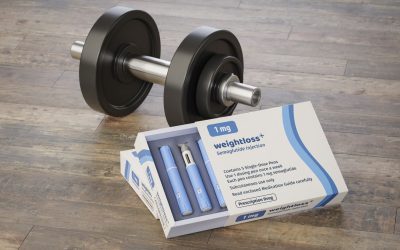
GLP-1 receptor agonists like semaglutide and tirzepatide have helped many women achieve meaningful weight loss, and there are real clinical benefits to this class of medication. But there is an important conversation that is not always happening in the exam room: when the scale goes down, not all of what is lost is fat.
The Weight Loss Trade-Off
GLP-1 receptor agonists and lean mass reduction are documented to be related. Depending on the study, a significant portion of weight lost on these medications may come from lean body mass rather than fat tissue alone. For women who are already navigating hormone-driven muscle loss, this distinction matters a great deal.
The risk is especially relevant for women in perimenopause and menopause, whose bodies are already less efficient at holding on to muscle. Losing additional lean mass during weight loss can accelerate metabolic slowdown, reduce strength, and create a cycle that is harder to reverse over time. This does not mean GLP-1 therapy is the wrong choice. It means the right support needs to be in place.
Protecting Your Muscle While on GLP-1 Therapy
This does not have to be an either/or situation. Women using GLP-1 therapy can take active steps to preserve muscle throughout the process. High protein intake and resistance training are the most evidence-supported strategies for reducing lean mass loss while on these medications, and they work best when initiated at the start of treatment.
Our clinical team at Aqua Vitae works with patients on GLP-1 programs to build in the nutritional and movement strategies that protect the lean tissue that matters most. Because weight loss without muscle preservation is not the goal, overall health is.
What You Can Do About Muscle Loss in Women
There is no single fix, but there is a clear and effective framework. These strategies work best when layered together and supported by lab testing that tells you where your hormones actually stand, so the approach is built around your biology rather than general guidelines.
Nutrition That Actually Supports Muscle
Protein is the building block of muscle, and women in midlife generally need more of it than standard recommendations suggest, particularly as estrogen and testosterone decline. Spreading protein intake across meals rather than concentrating it at dinner helps the body use amino acids more efficiently throughout the day.
Strong foundations for muscle-supportive nutrition include:
- Eggs, chicken, turkey, and lean red meat for complete amino acid profiles
- Wild-caught salmon and fatty fish, which also deliver omega-3s to support inflammation balance
- Greek yogurt and cottage cheese for protein, paired with calcium
- Legumes, edamame, and tofu are plant-based options with meaningful protein content
- Nuts, seeds, and quinoa to round out protein intake alongside key minerals
Pairing consistent protein with resistance training amplifies the benefits of both. Neither works as effectively in isolation, nor does either alone address the hormone piece.
The Case for Strength Training
Cardio has its place, but for women dealing with muscle loss in midlife, resistance training is the non-negotiable anchor. Lifting weights or working with resistance bands two to four times per week stimulates muscle protein synthesis and signals the body to retain lean tissue. Here is a practical starting point:
- Begin with compound movements that engage multiple muscle groups at once, such as squats, deadlifts, rows, and presses.
- Choose a weight that challenges you in the range of eight to twelve repetitions per set.
- Apply progressive overload over time, gradually increasing the weight or resistance as your strength improves.
- Allow at least 48 hours of recovery between sessions that target the same muscle groups.
- Prioritize protein in the hours before or after each training session to support repair and growth.
This conversation is always richer when lab work is part of it. At Aqua Vitae, we look at hormone levels, body composition, and lifestyle together before making recommendations, because the best plan depends on where a woman is in her hormonal journey.
The Takeaway
Muscle loss in women is real, it is rooted in hormone decline, and it is not something you have to accept as an unavoidable part of getting older. Understanding the connection between estrogen, progesterone, testosterone, and body composition provides a foundation for making informed choices that protect your long-term strength and metabolic health.
If you are ready to understand where your hormones actually stand and get a personalized plan that takes all of it into account, we invite you to schedule a consultation with the Aqua Vitae team. Our providers combine comprehensive lab work, clinical expertise, and individualized care to help women feel stronger, more energized, and more like themselves at every stage of life.